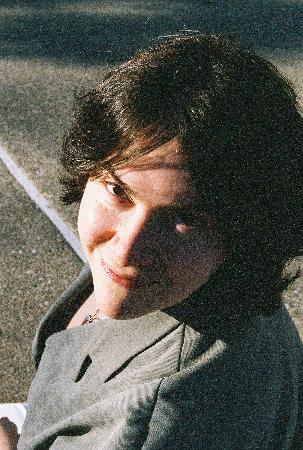
With a $2.95 binder from Staples, paper from the Archbishop Alter Library's printers, and two hundred ninety-six hours of hard labor, I have laid my research paper to rest. (I'm exaggerating a bit. Two hundred ninety-six is the number of hours I worried about the research paper, not the hours I actually toiled.) Thus my academic activities are drawing to a close--not done with 'em yet! There's still a capstone presentation to go!--and so it seemed a good time to pick up my cap and gown for graduation.
I'm looking at them now, all bundled in their happy cellophane wrapper with a label proclaiming the contents in clipped cadence. The package includes, for example, "1 TASSEL: REGULAR. BANDED. BLACK." Graduation accoutrements don't mess around.
I just got back from Spring Break, aka Research Paper Last Chance Gulch (if I didn't do it then, there'd be no way to concentrate on it before its due date, Thursday of this week). Our school--and here I'm talking about where I'm student teaching--had its last pre-Spring Break day April 1st. In other classrooms and out on the playground there were parties and Easter egg hunts; in Miss Pancella's class there was a math test. "How the Teacher Stole Easter" is what they'll title my life story. I did, however, seek to expand the second graders' cultural horizons with trivia I'd learned in high school French class. "Do you know what they do on April Fools Day in France?" I asked them. "People go around sticking paper cut-outs of fish on other people's backs, and then they run away shouting 'Poisson d'Avril!' 'April Fish!'" Oh, my kids were mighty intrigued by this. They worked hard on the pronunciation of "poisson"; they asked me to write the words on the board so they could spell them correctly; they wrote them on Post-Its and slapped them on my back. In retaliation, I stuck construction-paper April Fish in every one of their backpacks for them to discover discover on their arrival home.
In other news--yes, the reason I have not been writing about school for a while (besides the fact that I've been writing for school; see the topic "research paper" above) is that I have spent forty days listening to, and writing about, forty versions of the rock opera Jesus Christ Superstar. And yes, in case you were wondering--the most common reaction, when I tell people this, is "I can't believe you spent forty days listening to Jesus Christ Superstar. Yeah--I can't either, but the blog posts are testimony, and I'm the only one with access to the jeremiahsaunt.blogspot.com account, so I must have done it.
Back to teaching. And graduation. And this year of apprenticeship approaching its end. I figure it doesn't hurt to ask--do you know of schools that are hiring? There are about twenty-five of us entering the labor pool at once, and I'll vouch for one and all.
Monday, April 12, 2010


Saturday, April 3, 2010
The Easter Vigil
Listening to my last two Jesus Christ Superstars today (two because I had a duplicate, and I wanted to make sure I did indeed listen to 40 different versions, as advertised). The first: Karaoke JCS--all the backing tracks. I love this because I love singing along! The second is the 20th anniversary London revival from 1992 starring Paul Nicholas. I haven't any comment on that one yet because I've just put it on now.
Tonight is the Easter Vigil. I doubt I'll be online after that, and besides, even if I was, by the time I get home it will be Easter Sunday. So I had best write now.
The great JCS Lent is drawing to a close. Tonight at Mass we will light a fire and light the Easter Candle from it to show the light of the risen Christ breaking into the world after crucifixion and entombment. This is the part of the story not told in Jesus Christ Superstar--which isn't a strike against it. We don't tell that part of the story when we proclaim the Passion of Christ on Palm Sunday and Good Friday. We leave Jesus in the tomb.
Today I had the unprecedented experience of being offered condolences on Jesus' death. I was in conversation with a boy who didn't quite know what was being commemorated these few days; when I told him someone had died, he said, "I am sorry for your loss."
These last forty days have been about that loss. I've listened to it sung, and screamed, in English, French, Spanish, Japanese, Hungarian, Czech, Swedish and Russian. I've heard three decades' worth of re-envisioning the source material, which was itself a re-envisioning of source material nearly 2000 years old. But I was caught off guard by his expression of sympathy.
I'll leave you with that. My sympathies are with you on the death of Jesus. What a devastating loss.
And then tomorrow--a new song.
Tonight is the Easter Vigil. I doubt I'll be online after that, and besides, even if I was, by the time I get home it will be Easter Sunday. So I had best write now.
The great JCS Lent is drawing to a close. Tonight at Mass we will light a fire and light the Easter Candle from it to show the light of the risen Christ breaking into the world after crucifixion and entombment. This is the part of the story not told in Jesus Christ Superstar--which isn't a strike against it. We don't tell that part of the story when we proclaim the Passion of Christ on Palm Sunday and Good Friday. We leave Jesus in the tomb.
Today I had the unprecedented experience of being offered condolences on Jesus' death. I was in conversation with a boy who didn't quite know what was being commemorated these few days; when I told him someone had died, he said, "I am sorry for your loss."
These last forty days have been about that loss. I've listened to it sung, and screamed, in English, French, Spanish, Japanese, Hungarian, Czech, Swedish and Russian. I've heard three decades' worth of re-envisioning the source material, which was itself a re-envisioning of source material nearly 2000 years old. But I was caught off guard by his expression of sympathy.
I'll leave you with that. My sympathies are with you on the death of Jesus. What a devastating loss.
And then tomorrow--a new song.
Friday, April 2, 2010
Good Friday
Jesus Christ Superstar awards, Part II...
Best Pilate--Oh, Barry Dennen, hands down. Just the way he hisses "You hypocrites! You hate us more than him!" when the crowd is declaring its allegiance to Caesar would let him win it. Or when he whispers the last words of his lines after he has Jesus flogged: "You've got to be...careful. You could be dead...soon." His Pilate has pathos and tragic hero potential--which is all the more impressive given that he's a middle manager/bureaucrat. I love how Dennen takes us through Pilate's sneering dismissal of Christ to grudging respect to fear for his safety and final anger mixed with sadness.
Best Mary Magdalene--Again, there's no contest. Yvonne Elliman owns this role. Like Dennen, she packs everything into her performances. The "brown album" version of "Everything's Alright," for instance, has self-assurance to the point of swagger, but also a kind of gentleness and vulnerability.
Best Jesus--This is tough, but I think I have to give this to the Jesus of the original Japanese cast recording, whoever he may be. He always makes the right choices for how to deliver his lines. He doesn't belt out the high notes on "Gethsemane," for instance, which would seem to be an instant disqualification, but everything he says is invested with believable emotion. He also brings a dignity, a gravitas to the part which is too often lacking.
Best Judas--I'll be honest--it's tempting to just say Carl Anderson here. But I cannot get over Roger Daltrey in the BBC2 rendition. Wow. Carl Anderson may own the role, but Roger Daltrey is schooling everyone on how you put on a rock opera. (Just listen to the music on the video I've linked.)
Best Pilate--Oh, Barry Dennen, hands down. Just the way he hisses "You hypocrites! You hate us more than him!" when the crowd is declaring its allegiance to Caesar would let him win it. Or when he whispers the last words of his lines after he has Jesus flogged: "You've got to be...careful. You could be dead...soon." His Pilate has pathos and tragic hero potential--which is all the more impressive given that he's a middle manager/bureaucrat. I love how Dennen takes us through Pilate's sneering dismissal of Christ to grudging respect to fear for his safety and final anger mixed with sadness.
Best Mary Magdalene--Again, there's no contest. Yvonne Elliman owns this role. Like Dennen, she packs everything into her performances. The "brown album" version of "Everything's Alright," for instance, has self-assurance to the point of swagger, but also a kind of gentleness and vulnerability.
Best Jesus--This is tough, but I think I have to give this to the Jesus of the original Japanese cast recording, whoever he may be. He always makes the right choices for how to deliver his lines. He doesn't belt out the high notes on "Gethsemane," for instance, which would seem to be an instant disqualification, but everything he says is invested with believable emotion. He also brings a dignity, a gravitas to the part which is too often lacking.
Best Judas--I'll be honest--it's tempting to just say Carl Anderson here. But I cannot get over Roger Daltrey in the BBC2 rendition. Wow. Carl Anderson may own the role, but Roger Daltrey is schooling everyone on how you put on a rock opera. (Just listen to the music on the video I've linked.)
Thursday, April 1, 2010
Maundy Thursday
Tonight, the Part I of the Jesus Christ Superstar awards. I think I can speak with some authority now on whose interpretation of various characters was the best. So let's get to it, shall we?
Best Herod--Oh, let's give this one to Alice Cooper from the '96 London "cast recording" (in quotes since Alice Cooper wasn't actually in the cast of the show--he was just recruited for the recording). He plays it more circus sideshow than campy lounge lizard and so stands out from the crowd.
Best Simon Zealotes--Kelly Hogan, from Jesus Christ Superstar: A Resurrection. Again, part of the appeal is the casting against expectation--hey, look, a chick is singing this song!--but you can't win a prestigious award like this on shock value alone. Her take on an often over-the-top number is restrained, soulful, bombast-free.
Best Caiaphas--I don't remember a particular Caiaphas sticking out, so let's just give this one to a representative from the former Communist bloc on general principle.
Part II coming soon...
Best Herod--Oh, let's give this one to Alice Cooper from the '96 London "cast recording" (in quotes since Alice Cooper wasn't actually in the cast of the show--he was just recruited for the recording). He plays it more circus sideshow than campy lounge lizard and so stands out from the crowd.
Best Simon Zealotes--Kelly Hogan, from Jesus Christ Superstar: A Resurrection. Again, part of the appeal is the casting against expectation--hey, look, a chick is singing this song!--but you can't win a prestigious award like this on shock value alone. Her take on an often over-the-top number is restrained, soulful, bombast-free.
Best Caiaphas--I don't remember a particular Caiaphas sticking out, so let's just give this one to a representative from the former Communist bloc on general principle.
Part II coming soon...
Wednesday, March 31, 2010
Tenebrae
Today's Jesus Christ Superstar was arranged by Nick Ingman (a conductor/arranger who has worked with many in the pop music world as well as in film scoring; Shakespeare in Love is one of his more famous projects) and released in 1971. The LP includes a letter of reference from none other than Tim Rice, who sounds in it as if he was listening over my shoulder this Lent:
"Since the original record release of our rock opera Jesus Christ Superstar in October 1970, Andrew Lloyd Webber and I have been very lucky in that many musicians and singers have recorded their own treatments of selections from the opera. Some of these versions of Superstar have differed wildly from our original recording but as long as the new interpretation stands up in its own right as an interesting piece of musical production we don't mind whether it's performed by a symphony orchestra, a rock group, a middle-of-the-road choir or by a brass band (all of which has happened). If it's serious, and if it's musical, we are delighted and feel it can only help the work as a whole."
He goes on to particularly praise Nick's orchestrations, which are certainly pretty interesting, a mix of symphony and chorus not quite as easy-listening as Percy Faith but not quite rock and roll, either.
The other interesting bit in Tim Rice's blurb is toward the end, where he says, "I knew that we had no need to worry about Nick's work not being serious or musical, and I knew that we would have no need to avoid speaking to Nick for the next few years. (There are a few gentlemen who have tackled Superstar in such a way that I do not feel a strong friendship would be forged were Andrew and I to meet them.)"
Ouch!
And speaking of arrangements not quite passing muster with the creators, Greg sent me this li'l tidbit. Guess I won't be listening to that version next year!
"Since the original record release of our rock opera Jesus Christ Superstar in October 1970, Andrew Lloyd Webber and I have been very lucky in that many musicians and singers have recorded their own treatments of selections from the opera. Some of these versions of Superstar have differed wildly from our original recording but as long as the new interpretation stands up in its own right as an interesting piece of musical production we don't mind whether it's performed by a symphony orchestra, a rock group, a middle-of-the-road choir or by a brass band (all of which has happened). If it's serious, and if it's musical, we are delighted and feel it can only help the work as a whole."
He goes on to particularly praise Nick's orchestrations, which are certainly pretty interesting, a mix of symphony and chorus not quite as easy-listening as Percy Faith but not quite rock and roll, either.
The other interesting bit in Tim Rice's blurb is toward the end, where he says, "I knew that we had no need to worry about Nick's work not being serious or musical, and I knew that we would have no need to avoid speaking to Nick for the next few years. (There are a few gentlemen who have tackled Superstar in such a way that I do not feel a strong friendship would be forged were Andrew and I to meet them.)"
Ouch!
And speaking of arrangements not quite passing muster with the creators, Greg sent me this li'l tidbit. Guess I won't be listening to that version next year!
Tuesday, March 30, 2010
The Disciples
I know nothing about this recording of Jesus Christ Superstar other than it is from the 70s, so I am not going to comment on it. Instead, let's continue our wrapping-up theme. Today I want to talk about my New Favorite Line.
I call it that even though I don't think I had an Old Favorite Line. I have favorite songs--early on in my life, I could just listen to "Everything's All Right" over and over, and later my allegiance switched to the "Trial Before Pilate." But individual lyrics? None of them stood out in particular.
Then I engaged in this Lenten experiment. When I heard the original Broadway cast recording, a moment came in the "Trial Before Pilate" I had not heard in the recordings I knew before this Lent--the brown album, the movie soundtrack, or Jesus Christ Superstar: A Resurrection (a version we will get to soon). It came right after Pilate seethes:
"Look at your Jesus Christ.
I'll agree--he's mad. Ought to be locked up.
But--that is not a reason to destroy him.
He's a sad little man,
Not a king or god--
Not a thief--I need a crime!"
The crowd answers him in staccato rhythm. I couldn't make out what they were saying in this version. I heard the same shouts in the BBC Radio 2 version but still couldn't make them resolve into intelligible speech. Finally I had to consult Greg. He said the mystery lines were:
"Kill him! He says
He's God--He's a blasphemer.
He'll conquer you, and us,
And every Caesar!"
(In some versions they say "And even Caesar"--I prefer "every.")
Why is this so fantastic? Because it cuts right to the heart of the Jesus Problem. Far from being "harmless," as Pilate later claims Jesus is, He is the most dangerous character there can be. And killing Him is not going to solve the problem He poses. Brendan Kennelly sums up the paradox well in his Book of Judas poem "No Image Fits":
"I had not understood that annihilation
Makes him live with an intensity I cannot understand."
I call it that even though I don't think I had an Old Favorite Line. I have favorite songs--early on in my life, I could just listen to "Everything's All Right" over and over, and later my allegiance switched to the "Trial Before Pilate." But individual lyrics? None of them stood out in particular.
Then I engaged in this Lenten experiment. When I heard the original Broadway cast recording, a moment came in the "Trial Before Pilate" I had not heard in the recordings I knew before this Lent--the brown album, the movie soundtrack, or Jesus Christ Superstar: A Resurrection (a version we will get to soon). It came right after Pilate seethes:
"Look at your Jesus Christ.
I'll agree--he's mad. Ought to be locked up.
But--that is not a reason to destroy him.
He's a sad little man,
Not a king or god--
Not a thief--I need a crime!"
The crowd answers him in staccato rhythm. I couldn't make out what they were saying in this version. I heard the same shouts in the BBC Radio 2 version but still couldn't make them resolve into intelligible speech. Finally I had to consult Greg. He said the mystery lines were:
"Kill him! He says
He's God--He's a blasphemer.
He'll conquer you, and us,
And every Caesar!"
(In some versions they say "And even Caesar"--I prefer "every.")
Why is this so fantastic? Because it cuts right to the heart of the Jesus Problem. Far from being "harmless," as Pilate later claims Jesus is, He is the most dangerous character there can be. And killing Him is not going to solve the problem He poses. Brendan Kennelly sums up the paradox well in his Book of Judas poem "No Image Fits":
"I had not understood that annihilation
Makes him live with an intensity I cannot understand."
Monday, March 29, 2010
Holy Week!
We are on the last week of Jesus Christ Superstar!
So, first up--the original Australian cast from 1972. Good Pilate in this one, and the Judas is willing to go off the beaten path of notes more often than some. Very effective use of a children's chorus singing "Jesus Christ, Jesus Christ/Who are you, what have you sacrificed?"--especially because gradually a women's chorus picks up the chant. Jesus tends to indicate Drama by singing...at...half...speed.
I'm going to do some summing-up on my Lenten experience this week. First, let's take a look at how the decades are represented. Now, this isn't the full list--Greg still has a couple recordings to send me, but of the thirty-eight I have (yes, he did find a replacement for the duplicate), by far the most come from the 1970s--eighteen in all. And of those, none are from later than, I think, 1975; they cluster mostly around 1972. The next most-represented decade is the 2000s: thirteen recordings there. I also have seven recordings from the '90s, and none--NONE--from the '80s (unless, as I said, the recordings I have not gotten yet are from that benighted decade).
I would say that the largest stylistic variation are in the 70s recordings--what with Moog Superstar and The Soul of Jesus Christ Superstar and the two--count'em two--easy-listening offerings. The 2000s had Surferstar and what was billed by the Ultrasonic Rock Orchestra as a "21st century tribute," but even these were pretty faithful to the original, whereas Soul and Moog just spun off into the ether.
So, first up--the original Australian cast from 1972. Good Pilate in this one, and the Judas is willing to go off the beaten path of notes more often than some. Very effective use of a children's chorus singing "Jesus Christ, Jesus Christ/Who are you, what have you sacrificed?"--especially because gradually a women's chorus picks up the chant. Jesus tends to indicate Drama by singing...at...half...speed.
I'm going to do some summing-up on my Lenten experience this week. First, let's take a look at how the decades are represented. Now, this isn't the full list--Greg still has a couple recordings to send me, but of the thirty-eight I have (yes, he did find a replacement for the duplicate), by far the most come from the 1970s--eighteen in all. And of those, none are from later than, I think, 1975; they cluster mostly around 1972. The next most-represented decade is the 2000s: thirteen recordings there. I also have seven recordings from the '90s, and none--NONE--from the '80s (unless, as I said, the recordings I have not gotten yet are from that benighted decade).
I would say that the largest stylistic variation are in the 70s recordings--what with Moog Superstar and The Soul of Jesus Christ Superstar and the two--count'em two--easy-listening offerings. The 2000s had Surferstar and what was billed by the Ultrasonic Rock Orchestra as a "21st century tribute," but even these were pretty faithful to the original, whereas Soul and Moog just spun off into the ether.
Subscribe to:
Posts (Atom)